 Jan 2, 2026
Understanding Cape Verde Property Tax
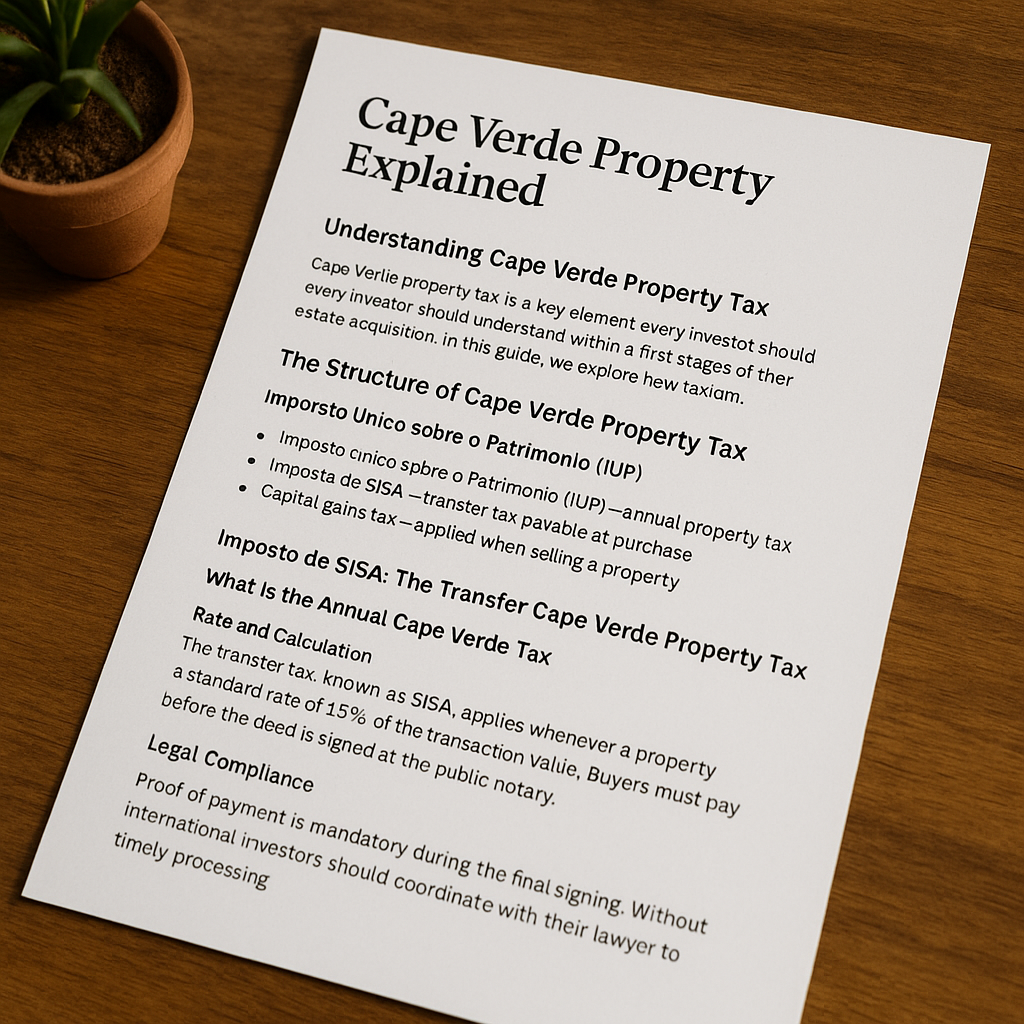
Cape Verde property tax is a key element every investor should understand within the first stages of their real estate acquisition. As the archipelago continues to attract international buyers, legal clarity becomes essential to make informed investment decisions. In this guide, we explore how taxation works, the types of taxes you must anticipate, and how to comply with local legislation.
The Structure of Cape Verde Property Tax
Main Applicable Taxes
Several taxes apply in Cape Verde’s real estate sector. While the system remains relatively simple compared to other destinations, each tax serves a specific legal and administrative purpose. The most common include:
- Imposto Único sobre o Património (IUP) – annual property tax
- Imposto de SISA – transfer tax payable at purchase
- Capital gains tax – applied when selling a property
Imposto Único sobre o Património (IUP)
What Is the Annual Cape Verde Property Tax?
The IUP is the recurring tax charged on property ownership. It works similarly to municipal property taxes in other countries. The rate typically ranges from 0.5% to 1.5% of the taxable value of the property. Municipalities assess the value periodically based on updated market conditions.
How Payment Works
Owners are notified via municipal services. Payment is made annually and must be completed to maintain legal compliance. Delays may result in penalties and accumulated interest.
Imposto de SISA: The Transfer Cape Verde Property Tax
Rate and Calculation
The transfer tax, known as SISA, applies whenever a property changes ownership. The standard rate is 1.5% of the transaction value. Buyers must pay this tax before the deed is signed at the public notary.
Legal Compliance
Proof of payment is mandatory during the final signing. Without SISA clearance, the transaction cannot be finalized. International investors should coordinate with their lawyer to ensure timely processing.
Capital Gains Related to Cape Verde Property Taxation
Taxable Gains
Capital gains tax applies when an owner sells a property at a profit. The general rate is 3%, although specific rules may apply depending on the seller's residency status and the nature of the property.
Exemptions and Deductions
- Documented renovation costs
- Certain primary residence exemptions
- Inflation-adjusted valuation
These deductions must be properly recorded with invoices and legal documents.
Administrative Procedures and Legal Framework
Documentation Required
Investors must gather the following documents for smooth processing:
- Property registration certificate
- Taxpayer number (NIF)
- Proof of identity
- Signed promissory contract (if applicable)
Institutional Authorities
Cape Verde’s tax system is regulated by the Ministry of Finance. For updated guidelines and legal frameworks, investors may consult the official government portal: Ministry of Finance.
Why Cape Verde Remains a Tax-Friendly Destination
Transparency and Efficiency
The simplicity of the Cape Verde property tax structure makes the country particularly appealing. Administrative processes are increasingly digitalized, reducing delays and ensuring clarity for foreign investors.
Attractive Market Conditions
The combination of low taxation, stable economic growth, and increasing tourism demand continues to drive real estate value upward. This creates both short-term and long-term investment opportunities.
Additional Resources for Investors
To better understand investment opportunities, consult internal resources such as Cape Verde property tax for additional legal and market insights.
By mastering the regulations surrounding Cape Verde property tax, investors can secure their acquisition strategy with confidence and transparency.


