 Dec 18, 2025
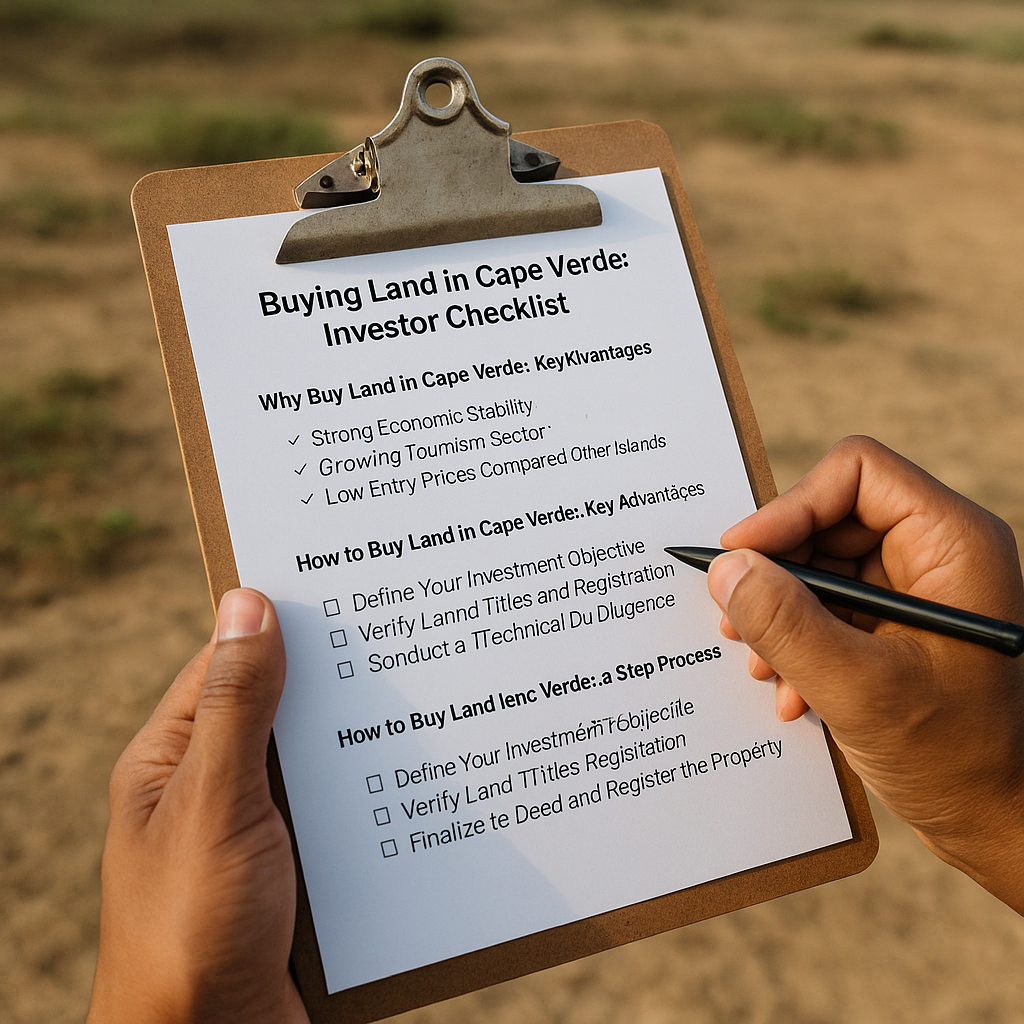
Buying Land in Cape Verde: Investor Checklist
Investing in land in Cape Verde is increasingly attractive for international buyers seeking strong growth potential, stable governance, and an accessible entry point into the African real estate market. This expert guide provides a structured investor checklist to help you buy land in Cape Verde with confidence, avoid common pitfalls, and identify the best opportunities.
Why Buy Land in Cape Verde: Key Advantages
Strong Economic Stability
Cape Verde benefits from steady economic policies, a stable democratic system, and close ties with the European Union. This political and financial stability greatly reduces investment risk.
Growing Tourism Sector
The country has one of the fastest-growing tourism industries in Africa, attracting investors looking for land suitable for hospitality, residential development, or eco-tourism projects.
Low Entry Prices Compared to Other Islands
Investors can acquire substantial land plots at significantly lower prices than in comparable Atlantic or Mediterranean destinations.
How to Buy Land in Cape Verde: Step-by-Step Process
Define Your Investment Objective
- Residential construction
- Commercial or hospitality projects
- Agricultural or eco-tourism initiatives
- Long-term land banking
Verify Land Titles and Registration
Always check the land registry (Conservatória do Registo Predial) to confirm clear ownership and absence of disputes. Cape Verde has a digitized registry system that facilitates verification.
Conduct a Technical Due Diligence
- Topographical survey
- Access to utilities (water, electricity, roads)
- Zoning and construction regulations
Sign the Promissory Contract
This preliminary agreement outlines the terms of the purchase and requires a deposit, usually between 10% and 20%.
Finalize the Deed and Register the Property
The final deed (Escritura Pública) is signed before a notary and then registered to secure full ownership.
Best Islands to Buy Land in Cape Verde
Maio
Known for untouched landscapes and major infrastructure investments, Maio is ideal for nature-based and long-term development projects.
Sal and Boa Vista
These islands attract tourists year-round and are suitable for hospitality or commercial development.
Santiago
The economic center of Cape Verde, offering urban infrastructure and diverse investment opportunities.
Legal and Tax Considerations
Foreign Ownership Regulations
Foreigners can acquire land freely in Cape Verde, with no nationality restrictions.
Taxes and Fees
- Property transfer tax (IUP): approx. 3%
- Stamp duty: approx. 0.5%
- Notary and registration fees: approx. 2%
Construction Regulations
Ensure compliance with local building codes and request necessary permits from municipal authorities.
Where to Find Verified Land Listings
Choosing reputable sources is essential to avoid fraudulent listings. A reliable option is to explore verified plots such as the one shown here: land for sale in Maio.
For official country information, you may also consult the government’s investment website: Governo de Cabo Verde.


